


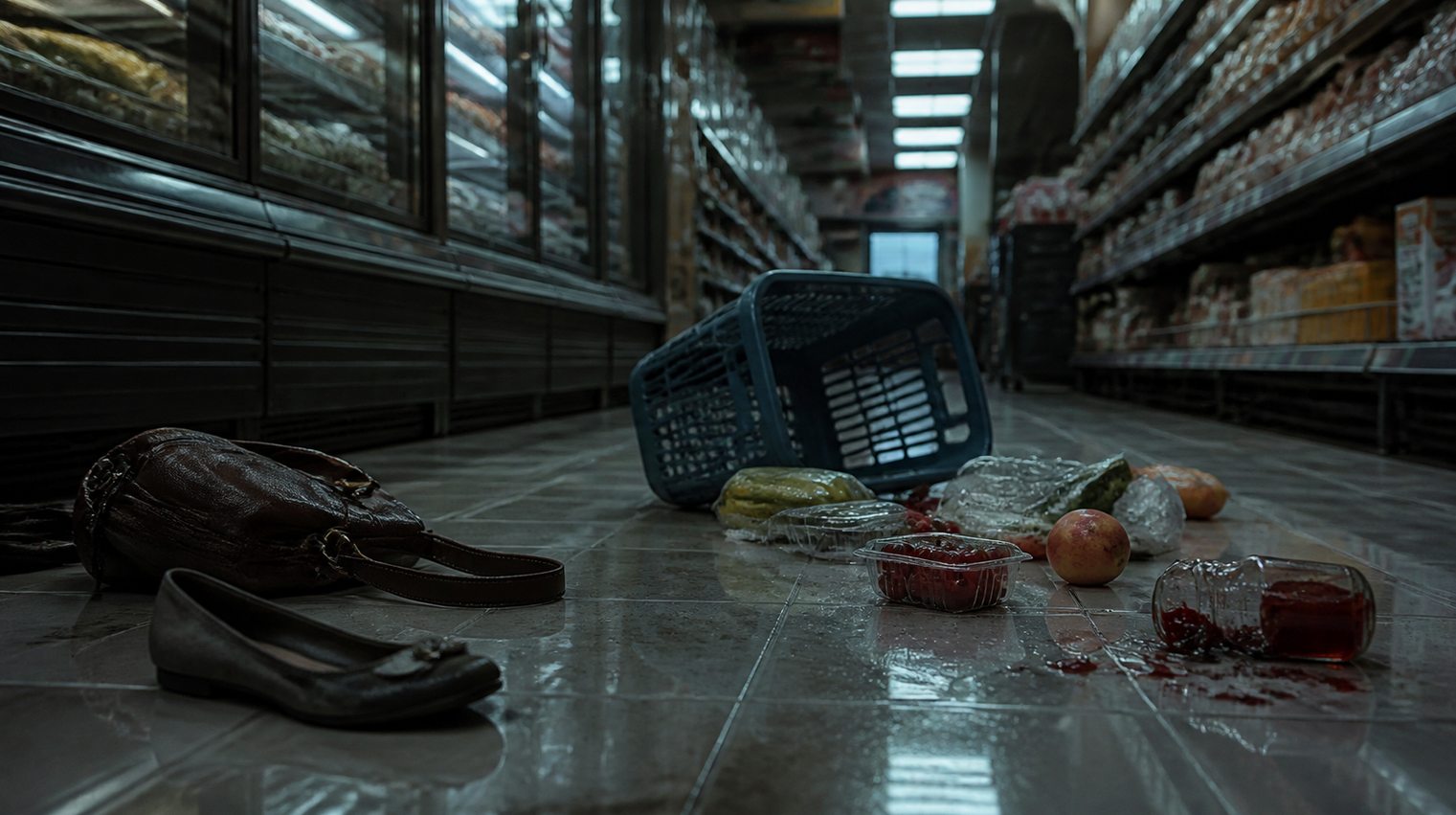
You were picking up groceries, your foot hit a wet spot nobody had marked, and now a wrist, a hip or a back won’t quit hurting. Grocery store slip and fall settlements in California turn on whether the store knew about the hazard (or should have), how badly you were hurt, and how much blame the store can push onto you. Here’s how California law treats these claims, what moves the number, and what to do now, while the evidence still exists.
Can You Sue a Grocery Store for a Slip and Fall in California?
Yes. California law requires a store to use reasonable care to keep its aisles safe. If a hazard on the floor injured you, and the store knew about it or should have found it, you can bring a claim against the store’s owner. The same rule applies at Walmart, Target and your neighborhood market.
Lawyers call this a premises liability claim, meaning a claim that a dangerous condition on someone else’s property hurt you. Our premises liability attorney page covers the other property cases we handle, and our guide to a slip and fall attorney in San Diego explains the general process.
What You Have to Prove
Every slip and fall claim has four parts:
- The store owed you a duty of care.
- The store breached that duty, for example by leaving a spill, a broken jar or a loose mat on the floor.
- That breach caused your fall.
- You suffered real damages, such as medical bills, lost income and pain.
Part one is rarely the fight. Part two is, and that’s where the notice rule comes in.
The Notice Rule: How Long Was the Hazard There?
Constructive notice means the store should have found a hazard through reasonable inspection, even if no employee ever saw it. In Ortega v. Kmart (2001), the California Supreme Court held that a store is not an insurer of its customers’ safety. It also held that once a plaintiff shows the store failed to inspect within a reasonable time, a jury can infer the hazard sat there long enough to be found. California’s standard jury instruction on constructive notice, CACI 1011, follows the same approach.
You don’t have to prove an employee watched the spill happen. You have to show it was there long enough that a careful store would have caught it. That is why the store’s inspection records and its video matter so much. If an employee made the mess, the notice question usually goes away.
How Much Are Grocery Store Slip and Fall Settlements Worth?
There is no standard number. A grocery store slip and fall settlement is your economic losses (medical bills, lost wages, future care) plus your non-economic losses (pain and suffering), reduced by any share of fault assigned to you.
What Drives the Number
| Factor | How it moves the value |
|---|---|
| Medical treatment | Bills so far and the cost of future care, like surgery or physical therapy, set the base. |
| Lost income | Time off work, plus any lasting limit on the work you can do. |
| Pain and suffering | Rises with injury severity and recovery time. Our pain and suffering calculator shows the common methods. |
| Strength of proof | Video, inspection logs, photos and witness statements make notice easier to prove. |
| Your share of fault | California reduces your recovery by your percentage of fault. |
| Gaps in treatment | Waiting weeks to see a doctor gives the insurer an argument that you weren’t hurt badly. |
The store’s name isn’t on that list. A Walmart claim and a corner market claim are valued the same way.
Why There Is No Honest Average
Plenty of sites quote “average” settlements, but a bruised hip and a wrist that needed surgery are different cases, and most of those numbers have no source. We won’t give you a figure we can’t back up. We can review your records and tell you what your claim looks like.
How Long a Settlement Takes
Most claims settle only after you’ve finished treatment or reached maximum medical improvement, the point where your doctor says you’ve healed as much as you’re going to. Settling earlier means guessing at costs you haven’t had yet. Our guide to how long a personal injury lawsuit takes in California walks through the timeline.
What to Do After a Slip and Fall in a Grocery Store
Get medical care first, then protect the evidence:
- See a doctor, even if you feel okay. Adrenaline hides injuries.
- Report the fall to a manager and ask for an incident report. Get a copy or a report number.
- Photograph the spot, the hazard, your shoes and any warning sign (or the lack of one).
- Get names and phone numbers for any witnesses.
- Don’t give the store’s claims adjuster a recorded statement before you’ve talked to a lawyer.
- Keep every medical record, receipt and pay stub.
At the Scene: Photos, Witnesses and the Incident Report
When you give your account, stick to what you know. “I slipped on liquid by the produce case” is a fact. “It must have been there for hours” is a guess, and it will be quoted back to you.
Surveillance Video and Inspection Logs: Ask for Them Early
Many stores overwrite video within days or weeks. Inspection sheets and the name of the employee assigned to that aisle can disappear too. A lawyer’s first move is usually a written preservation letter telling the store to keep all of it.
Medical Care and the Gap Problem
Insurers read treatment records like a timeline. A two-week gap between your fall and your first doctor visit turns into “she wasn’t really hurt.” See a doctor quickly, follow the treatment plan, and mention every symptom, even the small ones.
Walmart, Target and Other Big Chains: How Their Claims Work
Big chains don’t settle your claim at the store. It goes to a corporate claims department or an outside administrator, and that adjuster’s job is to limit what the company pays.
Walmart Slip and Fall Claims
Walmart is self-insured for many claims and uses its subsidiary, Claims Management, Inc. (CMI), to handle them. So the adjuster works for Walmart’s side, not an independent insurer. They may call quickly and ask for a recorded statement. You don’t have to give one. The same four-part test and the same notice rule apply.
Target and Other Grocery Chains
Other chains run claims through risk departments or outside administrators, and smaller grocers answer through a liability policy. The California rules are the same either way.
When the Store Blames You: Fault Sharing in California
California follows pure comparative negligence, which means your compensation is reduced by your percentage of fault, but you can still recover when you share the blame. The rule comes from the California Supreme Court’s 1975 decision in Li v. Yellow Cab. If a jury finds your damages are $100,000 and you were 20% at fault, you’d recover $80,000. That’s an illustration only.
Stores usually point to your phone, your footwear or a wet floor sign. A sign doesn’t end the case. It may show the store knew about the hazard, and the question becomes whether the warning was adequate and where you could see it.
Deadlines for Grocery Store Slip and Fall Claims in California
You generally have two years from the date of the fall to file a lawsuit under Code of Civil Procedure section 335.1. This applies to private stores. If a city, county or other public agency owns the property, you must first file a government claim, generally within six months. Miss the deadline and the court will almost always dismiss the case, so don’t wait out your treatment before you call a lawyer.
Do You Need a Grocery Store Slip and Fall Lawyer?
Not every fall does. If you walked away with a bruise and no medical bills, you may not. If you needed treatment, missed work, or the store’s adjuster is already calling, talk to a lawyer before you answer questions.
We handle premises liability cases on contingency, which means no attorney fees unless we win. Batta Fulkerson has recovered nearly $250M for clients and handled more than 15,000 cases, and our team is open 24 hours. Call us at (619) 333-5555.
Frequently Asked Questions
Can I sue a grocery store if I slipped and fell?
Yes, if the store’s negligence caused your fall and you were hurt. You have to show the store knew about the hazard or should have found it through reasonable inspection.
How much does Walmart pay out for a slip and fall?
There is no set amount. It depends on your injuries, your medical costs, how well you can prove the store should have found the hazard, and any fault assigned to you. Walmart handles injury claims through its own claims company, so have a lawyer review early offers.
What is a good settlement offer for a slip and fall?
A good offer covers all your medical costs, including future care, your lost income, and your pain and suffering. First offers are often low and come before you know the full cost of your injury. Have a lawyer review any offer before you accept.
How long do I have to file a slip and fall claim in California?
Generally two years from the date you were hurt. If a city, county or other public agency owns the property, a government claim generally must be filed within six months.
What if I did not report my fall right away?
You can still bring a claim, but it’s harder to prove. Report the fall as soon as you can and see a doctor.
Can I still sue if there was a wet floor sign?
Often, yes. A sign may show the store knew about the hazard. The question is whether the warning was adequate and visible. The store can argue you share the blame, but that reduces your recovery instead of ending it.
How much does a grocery store slip and fall lawyer cost?
Most injury lawyers, including our team, work on contingency, so you pay no attorney fees unless the case is won. Ask any lawyer to explain fees and case costs in writing before you sign.
We trust you found value in this blog article: Grocery Store Slip and Fall Settlements in California. We also hope you never need us, but if you or anyone you know might, we are always here to help!