


Updated September 21, 2026
You slipped, you hit the ground hard, and now you’re dealing with pain, bills, and a store manager who keeps saying “it happens.” If you need a slip and fall attorney in San Diego, here is the short version: get medical care, protect the evidence, and talk to a lawyer before you talk to the property owner’s insurance company. The proof that decides these cases is on a clock. Video gets overwritten, hazards get cleaned up, and witnesses forget.
Falls are common and often serious. The National Safety Council’s Injury Facts reports that more than 10 million people were treated in an emergency department for fall-related injuries in 2024. Some of those falls were nobody’s fault. Plenty were not.
Do You Have a Slip and Fall Case in California?
You have a case if a property owner’s negligence caused your fall and you were hurt. A slip and fall claim is a type of premises liability claim, which simply means you were injured by a dangerous condition on someone else’s property. California law requires owners to use reasonable care to keep their property safe. That duty comes from Civil Code section 1714 and the California Supreme Court’s 1968 decision in Rowland v. Christian.
What You Have to Prove: The Owner Knew or Should Have Known
To win, you show the owner knew about the hazard, or should have known about it, and didn’t fix it or warn people in time. In practice that happens one of three ways: the owner or an employee created the hazard, the owner knew about it, or it sat there long enough that a reasonable inspection would have found it.
That last path is where most store cases are won or lost. In Ortega v. Kmart Corp. (2001), the California Supreme Court held that you don’t have to prove exactly how long a spill sat on the floor. If the store hadn’t inspected within a reasonable window, a jury can infer the hazard was there long enough to be found. That is why inspection logs and surveillance video matter so much.
What If You Were Partly at Fault?
You can still recover. California follows pure comparative negligence, which means your compensation is reduced by your share of the blame instead of being wiped out. If a jury puts 20% of the fault on you, you recover 80% of your damages.
Insurers know this rule better than anyone, and they will work to shift blame your way. You weren’t watching. You wore the wrong shoes. The spill was obvious. Don’t accept their version of your fall.
What to Do After a Slip and Fall in San Diego
Get medical care first, then document everything before the scene changes. Here is the order that protects your claim:
- Get checked out today. Adrenaline hides injuries, and “I’m fine” is the most common thing people say right after a fall. An ER or urgent care visit starts the medical record, and gaps in treatment get used against you.
- Report the fall to the manager, landlord, or property owner, and ask for a written incident report. Get a copy, or at least the name of the person who took it.
- Photograph the hazard and the area before anyone cleans or repairs it. Get wide shots and close-ups of the wet floor, cracked step, torn carpet, missing warning sign, or dark stairwell.
- Collect witness names and phone numbers before people leave.
- Ask the property to preserve its surveillance video. Do it in writing, and better yet through an attorney. Many systems record over old footage within weeks.
- Keep the shoes and clothes you wore, and stay off social media. A photo of you smiling at a birthday dinner will show up in a defense file.
- Don’t give a recorded statement to the owner’s insurance company. Call an attorney first.
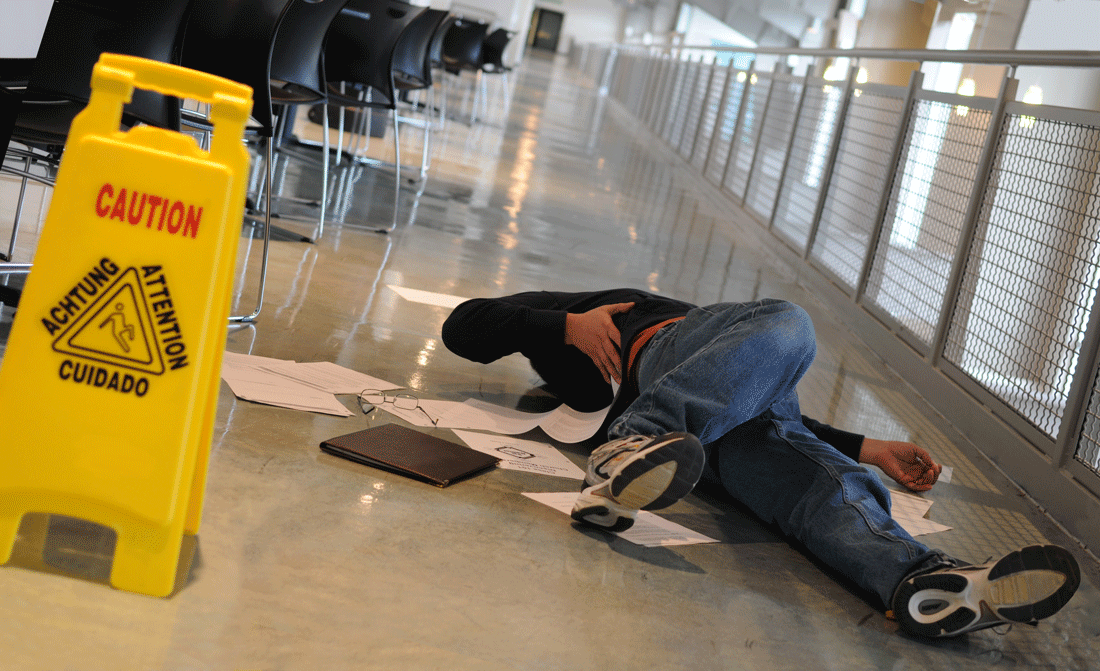
Photos, video, and the incident report are the first things a San Diego slip and fall attorney asks for.
Where Slip and Fall Accidents Happen in San Diego
They happen anywhere an owner has a duty to keep the ground safe, and who is responsible changes with the location.
Stores, Restaurants, and Parking Lots
Wet floors in grocery aisles, spills near a restaurant kitchen, cracked pavement, and poorly lit lots cause a large share of claims. The owner or operator is usually responsible, and sometimes a cleaning or maintenance contractor shares the blame. Our guide to parking lot accidents covers the lot-specific issues.
Apartments, Rentals, and Sidewalks
Landlords owe a duty of care in common areas like stairs, walkways, laundry rooms, and lobbies. Sidewalks are trickier, because responsibility can fall on the city, the adjacent property owner, or both. Sorting out who owns the problem is part of the work, and it decides which deadline applies to you.
City, County, and Other Government Property
Parks, piers, public buildings, transit stops, and streets are government property, and claims against a public agency follow different rules with a much shorter deadline. See our breakdown of the California Tort Claims Act for how that process works.
Pools, security failures, and falling objects are premises liability cases too. Our premises liability attorney page covers all of them.
How Much Is a Slip and Fall Case Worth in California?
There is no fixed number. A slip and fall case is worth your financial losses plus the human cost of the injury, adjusted for how strong the proof is and how much fault the insurer can pin on you.
Financial losses, called economic damages, include medical bills, future treatment, and lost income. Pain and suffering, loss of enjoyment of life, and emotional distress are non-economic damages. Our pain and suffering calculator walks through how those are measured.
What Drives the Value of Your Claim
- How severe and permanent the injury is (fractures, spinal injuries, and head injuries sit at the high end)
- Medical costs to date and the cost of surgery and rehab still ahead
- Time missed from work and any lasting effect on your ability to earn
- How clearly you can prove the owner knew or should have known about the hazard
- The percentage of fault, if any, assigned to you
We won’t quote you an “average” slip and fall settlement. Averages hide a huge spread, and any number a website gives you before someone reads your medical records and the property’s inspection history is a guess.
How Long Does a Slip and Fall Case Take?
A clear claim with modest injuries can settle in a few months. Cases with surgery, permanent injury, or a fight over blame usually take a year or longer, and filing a lawsuit adds time. It’s often smart to wait until your doctor knows how far you’ll recover before settling, because you only get one settlement. The steps of a personal injury lawsuit show where the time goes.
How Long Do You Have to File a Slip and Fall Claim?
You have two years from the date of the fall to file a lawsuit against a private owner. If the property belongs to a city, county, or other public agency, you have only six months to present a written claim.
| Who owns the property | Deadline | Law |
|---|---|---|
| Private owner or business | 2 years to file a lawsuit | Code of Civil Procedure 335.1 |
| City, county, or other public entity | 6 months to present a claim | Government Code 911.2 |
Miss the six-month window and a late claim is hard to save. If you aren’t sure who owns the property where you fell, don’t wait to find out.
Do You Need a Slip and Fall Attorney in San Diego?
You don’t need a lawyer to file a claim, but you will be up against a property owner’s insurer and its lawyers, and they handle these claims every day. A San Diego slip and fall attorney sends the preservation letter for video, pulls the incident report and inspection logs, identifies every party who shares responsibility, and deals with the adjuster so you don’t have to. If the insurer won’t pay a fair amount, we prepare the case for trial.
We work on contingency. You pay nothing unless we win.
Why San Diego Families Call Batta Fulkerson After a Fall
Batta Fulkerson has recovered nearly $250 million for injured clients, with a 98% success rate across more than 15,000 cases, and San Diego has voted us its favorite personal injury firm. We’re open 24 hours. Read what our clients say on our client reviews page, or learn more about our San Diego personal injury attorneys.
You got hurt on someone else’s property. Call (619) 333-5555 or use our free case review form. No fees unless we win.
Frequently Asked Questions
Is it worth suing for a slip and fall in California?
It’s worth it when your injuries are more than minor and you can prove the owner’s negligence. Medical bills, time off work, and pain and suffering add up fast, and insurers rarely offer fair money without a fight. A free consultation with a slip and fall attorney will tell you whether your claim is strong enough to pursue.
What is the average settlement for a slip and fall in California?
There is no reliable average. Settlements range from a few thousand dollars for minor injuries to hundreds of thousands, or more, for serious or permanent ones. The strength of the proof and any fault assigned to you move the number in either direction.
How do you win a slip and fall lawsuit?
You have to show that the owner owed you a duty of care, knew or should have known about the hazard, failed to fix it or warn you, and that the hazard caused your injuries. Incident reports, photographs, surveillance video, inspection logs, and medical records carry the case.
What evidence matters most in a slip and fall claim?
Photos of the hazard taken right away, surveillance video, the written incident report, witness contact information, and your medical records matter most. Cleaning and inspection logs help show whether the owner checked the area within a reasonable time.
Can I sue if I fell on a sidewalk, in an apartment, or on public property?
Often, yes. Landlords owe a duty of care in common areas like stairs and walkways. Responsibility for a sidewalk can fall on the city, the neighboring owner, or both. Claims against public property must be presented to the agency within six months.
What if the fall was partly my fault?
You can still recover. California’s pure comparative negligence rule reduces your compensation by your percentage of fault but doesn’t bar it. If a jury finds you 25% at fault on a $100,000 case, you would recover $75,000.

We trust you found value in this blog article: Slip and Fall Attorney San Diego: What to Do After a Fall. We also hope you never need us, but if you or anyone you know might, we are always here to help!