


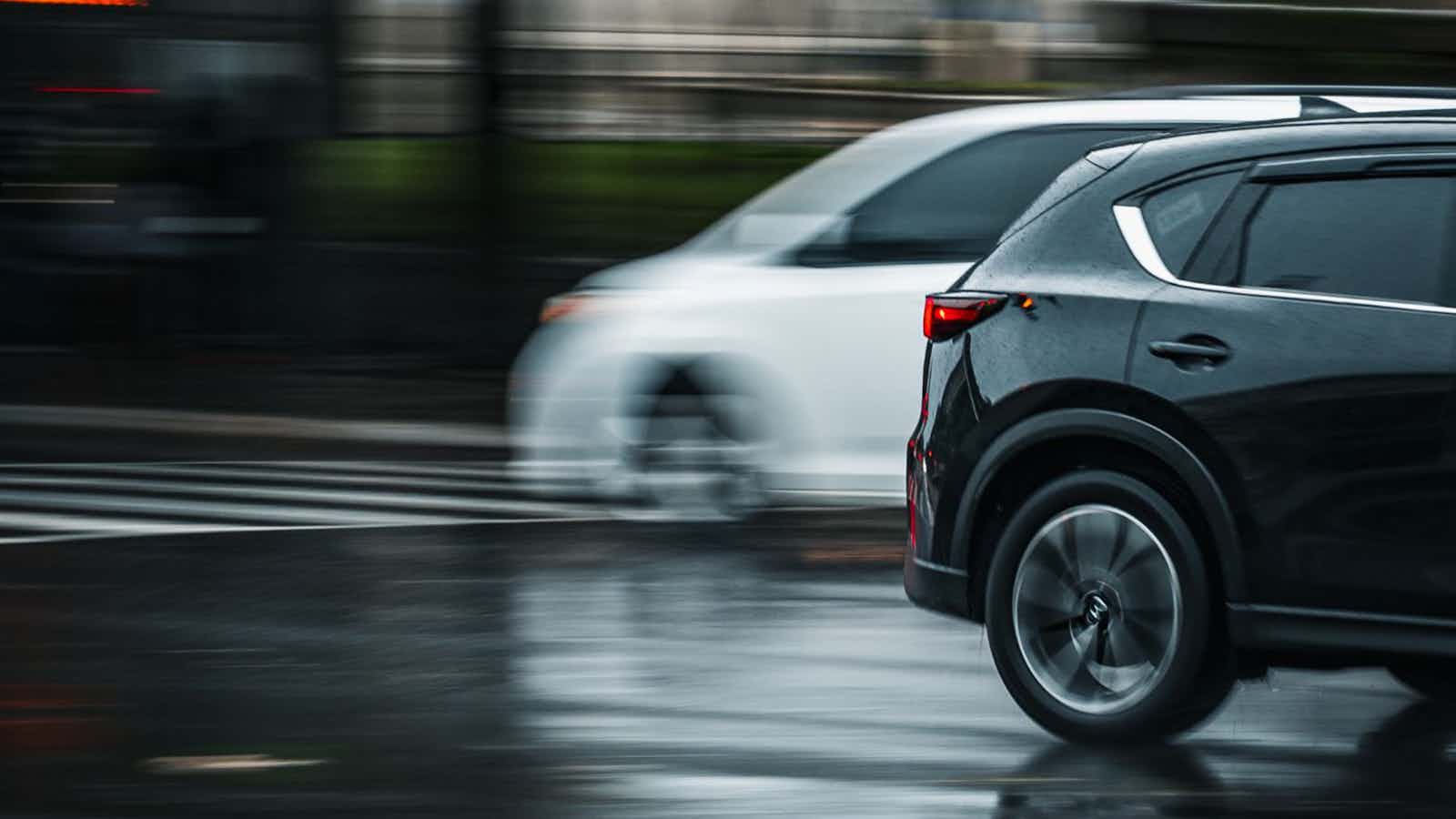
San Diego doesn’t get much rain. But when the wet season arrives — usually November through March — our roads become genuinely dangerous. Oil and debris that have baked onto dry pavement for months turn slick the moment water hits them. And drivers who aren’t used to wet conditions make mistakes.
One of the most common: hydroplaning. It’s fast, it’s scary, and it causes serious accidents. Here’s what actually causes it, how to reduce your risk, and — most importantly — what your options are if another driver’s car hydroplaned into yours.
What Is Hydroplaning?
Hydroplaning — also called aquaplaning — happens when a layer of water builds up between your tires and the road surface faster than the tires can push it away. When that happens, your tires lose contact with the pavement. You’re essentially floating on water. Steering and braking have little effect until your tires reconnect with the road.
It can happen in as little as a tenth of an inch of water on the road. And at highway speeds, it can happen without warning.
The Four Main Causes of Hydroplaning
1. Speed
Speed is the biggest factor. The faster you’re going, the less time your tires have to channel water away from the contact patch. Most hydroplaning research puts the threshold around 35 mph on wet roads — though worn tires can lose traction even lower. At 55–65 mph on a wet freeway, hydroplaning risk is significant even for newer vehicles.
Slowing down in wet conditions isn’t just good advice — it’s one of the few things that directly reduces your risk of losing control.
2. Tire Tread Depth
Tire tread channels are the grooves that move water away from the contact patch. When tread wears down, those channels get shallow. Less drainage means water builds up faster under the tire — and hydroplaning becomes more likely at lower speeds.
California law requires minimum tread depth of 2/32 of an inch. That’s the legal floor, not the safety floor. Most tire safety experts recommend replacing tires at 4/32. A quick test: place a quarter into the tread groove — if you can see the top of Washington’s head, you’re under 4/32 and should consider replacement.
3. Water Depth on the Road
Deeper standing water means more water your tires have to displace. Puddles, pooling at low points, and poorly drained roadways all increase hydroplaning risk. In San Diego, intersections and freeway underpasses are common pooling spots after heavy rain.
4. Tire Pressure
Under-inflated tires have a wider, flatter contact area that moves water less efficiently. Over-inflated tires make less contact with the road. Both conditions can increase hydroplaning vulnerability. Keeping tires inflated to the manufacturer’s recommended PSI — found on the door jamb sticker, not the tire sidewall — helps maintain optimal traction.
How to Tell If You’re Hydroplaning
The signs are distinct: your steering suddenly feels light or unresponsive, your engine RPMs may spike (especially with rear-wheel drive), and you may feel the rear of the car drift. The natural instinct — braking hard or turning sharply — usually makes it worse.
What to do instead:
- Stay calm and ease off the accelerator — don’t brake suddenly
- Hold the steering wheel firmly and straight — small corrections only
- If you have to brake, use gentle, steady pressure — modern ABS systems are designed to handle this
- Wait for your tires to reconnect with the road surface before making any steering corrections
- Once traction returns, steer gently in the direction you want to go
The whole event usually lasts less than a second. The danger is the panic response — not the hydroplaning itself.
San Diego’s Rain Risk: Why Local Roads Are Especially Dangerous After Dry Spells
San Diego averages around 10 inches of rain per year — most of it concentrated in a short wet season. That extended dry period means motor oil, tire rubber, and road grime accumulate on surfaces for months without washing away.
The first rain of the season — often in October or November — is statistically the most dangerous. That first rain lifts all that built-up residue and creates a slick film before enough water falls to wash it away. California Highway Patrol data consistently shows a spike in wet-weather accidents at the start of the rainy season.
If you’re driving in San Diego during or immediately after the first rain, treat it as more dangerous than it looks. Slow down. Add extra following distance. And watch for drivers around you who aren’t.
If Another Driver’s Car Hydroplaned and Hit You
This is the part that matters most if you’re reading this after an accident.
Hydroplaning doesn’t automatically excuse a driver from liability. In California, drivers have a legal duty to adjust their speed and driving behavior to match road conditions. If someone was driving at freeway speed during a rainstorm, had bald tires, or failed to maintain safe following distance on wet roads — that can be negligence.
California’s Negligence Standard
California uses a pure comparative fault system. If the other driver caused the accident by failing to drive safely in wet conditions, they’re responsible for your injuries and damages — even if the weather was a contributing factor. Weather isn’t a legal defense when a driver had the opportunity to slow down or maintain their vehicle properly but didn’t.
What to Document at the Scene
If you’re in a wet-weather accident:
- Photograph the road surface, including standing water or visible pooling
- Photograph the other vehicle’s tires if you can safely do so
- Note the speed limit and approximate speed of the other car before impact
- Get the weather conditions on record (the 911 call and police report will help)
- Note whether the other driver had lights on — California law requires headlights when using wipers
Bald tires on the at-fault vehicle are particularly useful evidence. If their tires were at or below legal minimum tread depth, that directly supports a negligence claim.
Insurance Company Tactics in Rain Accidents
Expect the other driver’s insurer to argue that weather was the primary cause — not their driver’s behavior. “It was raining” is a standard line they use to reduce liability or shift blame. An experienced personal injury attorney knows how to counter this argument with evidence of the driver’s specific choices: their speed, their tire condition, their following distance.
Frequently Asked Questions About Hydroplaning
At what speed does hydroplaning occur?
Hydroplaning can occur at speeds as low as 35 mph on wet roads, especially with worn tires. At highway speeds of 55–65 mph, the risk increases significantly. Speed is the most controllable factor — slowing down in wet conditions directly reduces hydroplaning risk.
How do I know if my tires are safe in wet weather?
Use the quarter test: insert a quarter into your tire tread groove. If you can see the top of Washington’s head, your tread is below 4/32 — replace the tires before driving in rain. Also check for uneven wear, cracking, or bulging in the sidewall. If you’re not sure, any tire shop can give you a free inspection.
Is hydroplaning the driver’s fault?
Not automatically — but in many cases, yes. California law requires drivers to adjust speed and behavior to match road conditions. A driver who was speeding in heavy rain, had worn tires, or was following too closely may be found negligent even if they claim they “just hydroplaned.” The cause matters. So does what the driver could have done differently.
What should I do right after a hydroplaning accident?
Call 911, get to safety, and don’t move injured people unless there’s immediate danger. Document the scene with photos, including road conditions and tire tread on both vehicles. Get witness contact information. Don’t discuss fault at the scene. Call a personal injury attorney before giving a recorded statement to any insurance company.
Can I get compensation if a hydroplaning car hit me?
Yes. If the other driver was negligent — through excessive speed, poorly maintained tires, or failure to drive carefully in wet conditions — you have the right to compensation for your injuries, vehicle damage, lost wages, and other losses. California’s comparative fault rules don’t protect drivers who caused accidents through their own negligence just because it was raining.
Does California require headlights in the rain?
Yes. California Vehicle Code Section 24400 requires headlights to be on whenever windshield wipers are in use. A driver without headlights in the rain may be in violation, which can support a negligence claim if that reduced their visibility and contributed to the accident.
Hurt in a Rain-Related Accident in San Diego? We Can Help.
The Batta Fulkerson team has recovered nearly $250 million for injured San Diego clients, including people hurt in wet-weather crashes where the other driver tried to blame the rain. We know how to build these cases — and we know how insurance companies try to avoid paying them.
Call us for a free case review. No fees unless we win.

We trust you found value in this blog article: What Causes Hydroplaning — and What to Do If a Hydroplaning Car Hit You. We also hope you never need us, but if you or anyone you know might, we are always here to help!